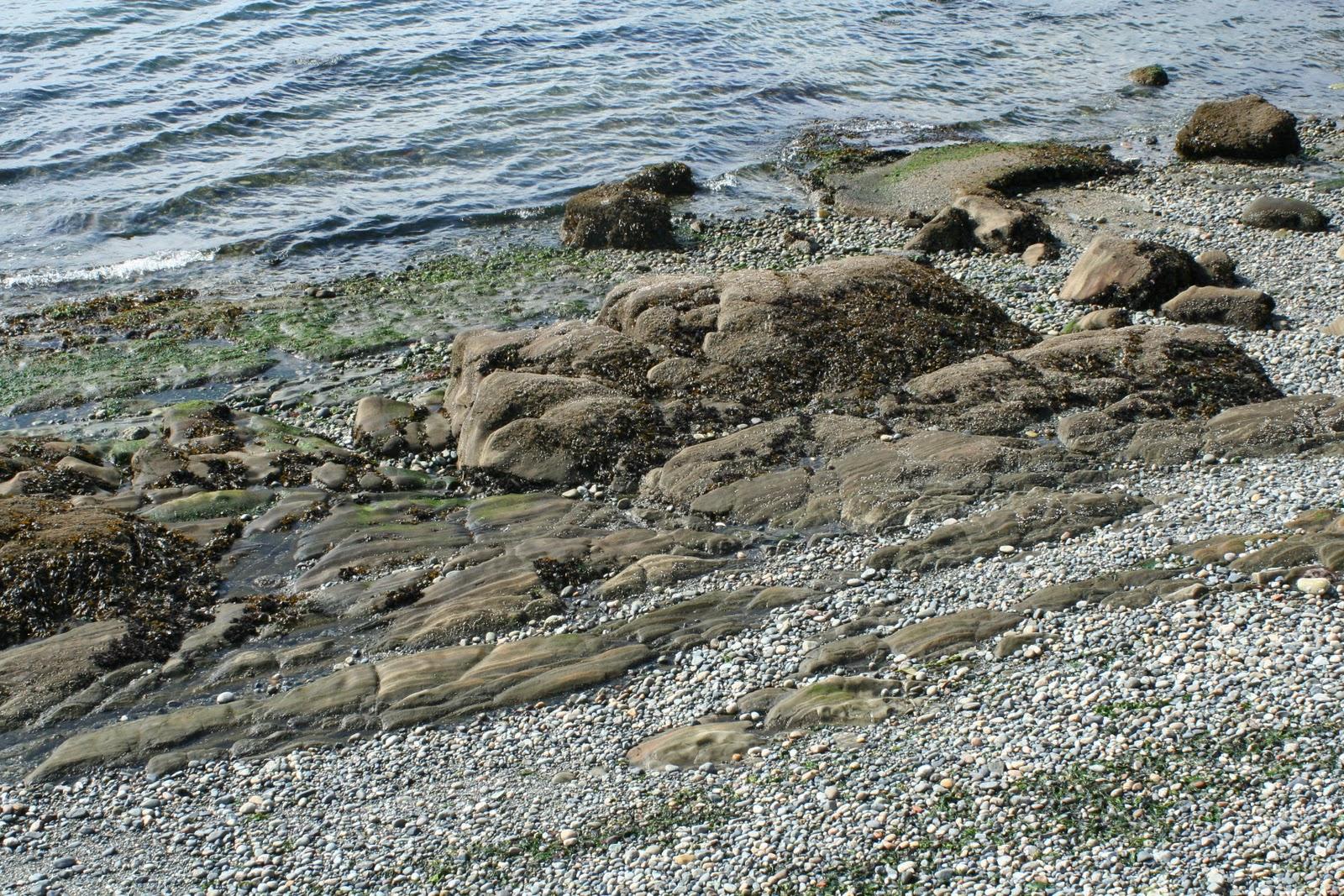
Alki Beach Blakeley Formation Fossil Hunting Guide
Image: m9point2s.blogspot.com
At Alki Point on the West Seattle peninsula, the tan sandstone bedrock of the Oligocene Blakeley Formation crops out beneath the beach gravel and is exposed at low tide. The Blakeley is the shallow-marine near-shore unit of the Puget Sound lowlands and produces marine mollusks, the occasional shark tooth, and famous crab-bearing concretions documented in the Burke Museum collection. Alki Beach is a Seattle city park — viewing only; collecting is prohibited.
Alki Beach is a 2.5-mile city park along the northwestern tip of the West Seattle peninsula in King County, Washington. The beach is best known to Seattleites as a recreation strip with skyline views across Elliott Bay, but it is also one of the most accessible exposures of the Oligocene Blakeley Formation anywhere in the Puget Sound lowlands. At low tide the flat tan sandstone bedrock of the Blakeley shows beneath the typical glacial-till beach gravel, particularly off Alki Point at the western end of the park. The bedrock dips gently below the high-tide line and emerges as wide weathered ledges that have been collected scientifically since the late 19th century.
The Blakeley Formation is the late Eocene to early Miocene marine shallow-shelf unit of the Puget Sound lowlands. At Alki it is a medium-grained tan sandstone with thin siltstone beds, deposited in a near-shore sandy shelf environment about 25 to 33 million years ago. Marine mollusks are common in the bedding planes; calcareous concretions in the unit famously contain crabs and other articulated invertebrates and have been featured in Burke Museum collections.
Alki Beach is a Seattle city park. Under Seattle Parks rules (and as posted on park signage), removing any material from the park, including fossils, is prohibited. Visitors observe and photograph the bedrock outcrop and the loose fossils washed onto the gravel; they do not collect. For a Blakeley Formation page where the bedrock is similar but the access is differently situated (Bainbridge Island), see the Fort Ward Park guide.
Location and Directions
Alki Beach Park stretches roughly from 64th Place SW (Alki Point) east to Duwamish Head at the mouth of the Duwamish River. The most accessible bedrock exposures are off Alki Point at the western end, around the small craft beach and the Alki Point Lighthouse area. Street parking is free along Alki Avenue SW; metered lots are also available.
From downtown Seattle by car the drive is about 8 miles via the West Seattle Bridge; by water taxi (King County) it is about 12 minutes from the central waterfront, dropping at Seacrest Park about 1.5 miles east of the bedrock exposures.
Practical notes
Tide tables matter. The Blakeley bedrock is most visible at minus tides (below 0.0 feet at NOAA Seattle) when wide swaths of the rock platform are exposed. The Seattle tide cycle has two highs and two lows per day; check NOAA Seattle tide predictions before visiting. The bedrock is slippery when wet; wear non-slip footwear. Sneaker waves and wave splash are routine. Children should be supervised on the wet bedrock.
What Fossils You'll Find
The Blakeley Formation crops out at Alki as a medium-grained, tan to light-grey, moderately to well-sorted sandstone with thin interbedded siltstones, deposited in a shallow near-shore sandy shelf during the late Oligocene to early Miocene. The fossil assemblage is dominated by marine mollusks; calcareous concretions in the unit preserve articulated invertebrates with extraordinary detail.
Marine bivalves (notably Yoldia, Acila, Spisula, Nuculana, and others typical of the Pacific Northwest Oligocene fauna) and gastropods (turritellids, naticids, and others) occur both as compressions on the bedrock and as loose specimens in the rounded "concretion gravel" that washes onto the beach. The most famous Blakeley fossils are calcareous concretions, often roughly egg-shaped to ovoid, that on cracking reveal entire articulated crabs, fish skeletons, occasional sharks teeth, and small mollusk assemblages. These concretions are the Blakeley Formation's signature; the Burke Museum maintains a working collection of them and runs occasional public preparation demonstrations at the museum's fossil lab. The shark Echinorhinus blakei, named for the Blakeley Formation, is among the documented taxa.
Trace fossils (burrows, escape structures) are common on the bedrock bedding planes. Plant material (wood, conifer twigs, occasional cones) appears in some beds, reflecting input from the contemporaneous coastal forests.
"One of the most accessible exposures of the Blakeley Formation occurs at Alki Point in West Seattle. This bedrock is only visible during low tide, when the retreating waters reveal the ancient sandstone shelf beneath the typical beach environment." Northwest Geological Society field guide (Haugerud, 2000), on the Bedrock Geology of Seattle
Geologic History
The Blakeley Formation records the marine shelf history of the proto-Puget Sound region during the late Oligocene to early Miocene, roughly 33 to 25 million years ago. The Cascade Range had begun to rise to the east but had not yet reached its modern elevation, and the modern Puget Lowland was a shallow embayment of the Pacific receiving sand and mud from the eastern highlands and the developing volcanic arc. The Blakeley accumulated as alternations of medium-grained sandstone (with rare conglomerate beds) and finer siltstone in 20 to 100 metres of water on a sandy shelf with abundant marine life. Periods of slower sedimentation allowed phosphatic and calcareous concretions to grow around isolated organic nuclei — a single buried crab, a fish skeleton, a small mollusk cluster — producing the famous concretion fauna.
After Blakeley deposition the formation was tilted by movement on the Seattle Fault system and subsequent regional tectonics; locally beds dip 60° or more from their original horizontal orientation. The most recent Quaternary glaciations scoured the modern Puget Sound surface and removed most younger material, leaving the Blakeley bedrock at or just below the modern shoreline at Alki Point and along the eastern shore of Bainbridge Island.
How Alki became a fossil destination
The Blakeley Formation has been collected scientifically since the late 19th century; it was formally described in the early 20th-century geological literature. Modern interpretive work in Seattle has been led by the Burke Museum and the Northwest Geological Society, the latter publishing the standard field guide to the Bedrock Geology of Seattle (Haugerud, 2000). The Alki Point exposure is the most accessible of the Seattle-area Blakeley outcrops and is the standard introductory stop for university geology courses in the region.
Collecting Rules & Regulations
Is Fossil Collecting Allowed?
No. Alki Beach Park is administered by Seattle Parks and Recreation under the Seattle Municipal Code. Removing any natural materials from the park is prohibited.
Key Points:
- Viewing and photography only. Do not remove any rock, fossil, or shoreline material.
- Visit at low tide (especially minus tides) for the best bedrock exposure.
- The bedrock is slippery and uneven; wear non-slip footwear and supervise children.
- For collecting at a Blakeley-equivalent locality, no public-access option currently exists in Washington; the Burke Museum is the institutional gateway.
- Report any unusual or significant finds (especially vertebrate or articulated material in concretions) to the Burke Museum.
Sources
Nearby sites
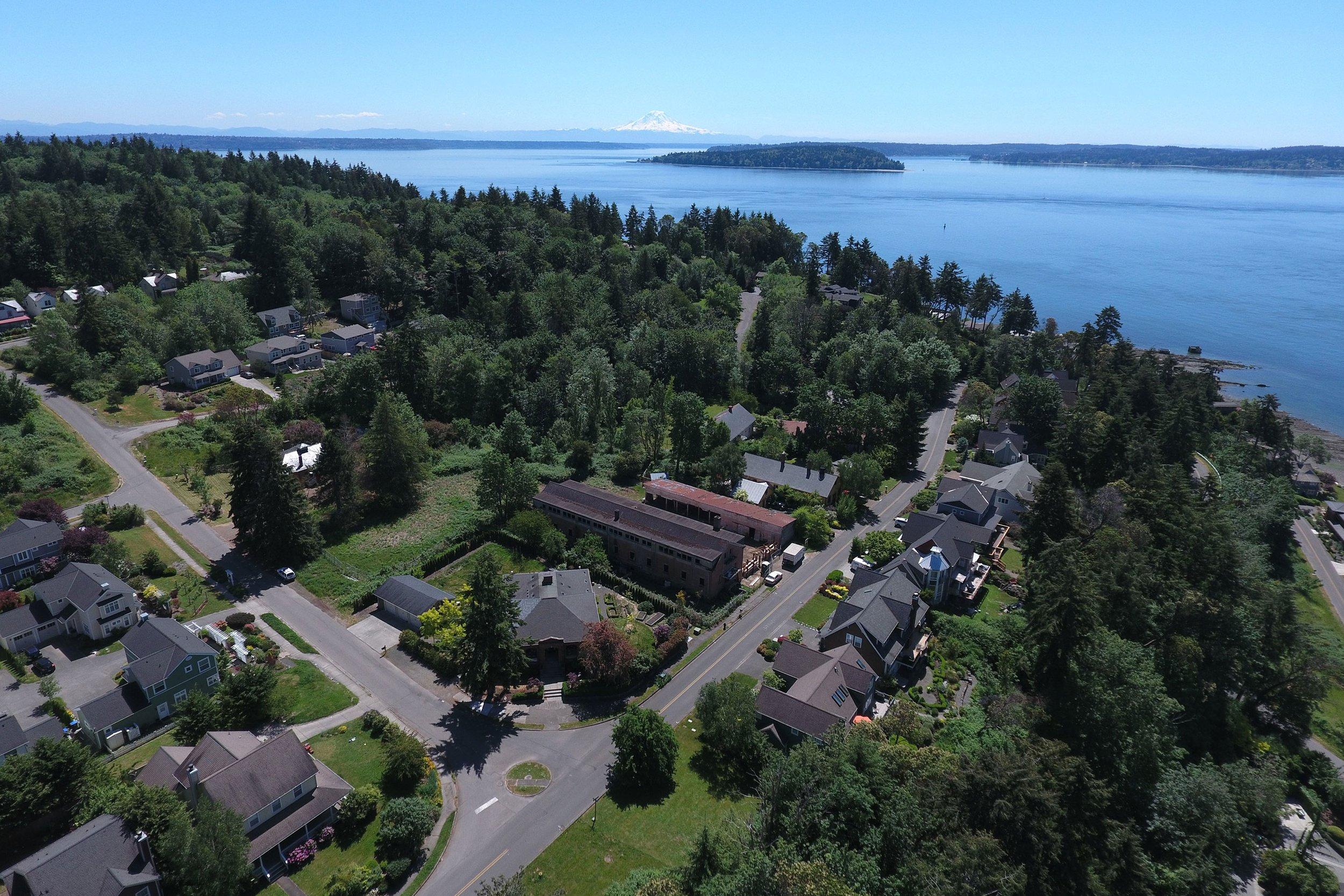 Fort Ward Park (Blakeley Formation) Fossil Hunting GuideMarine mollusks, Crab concretions
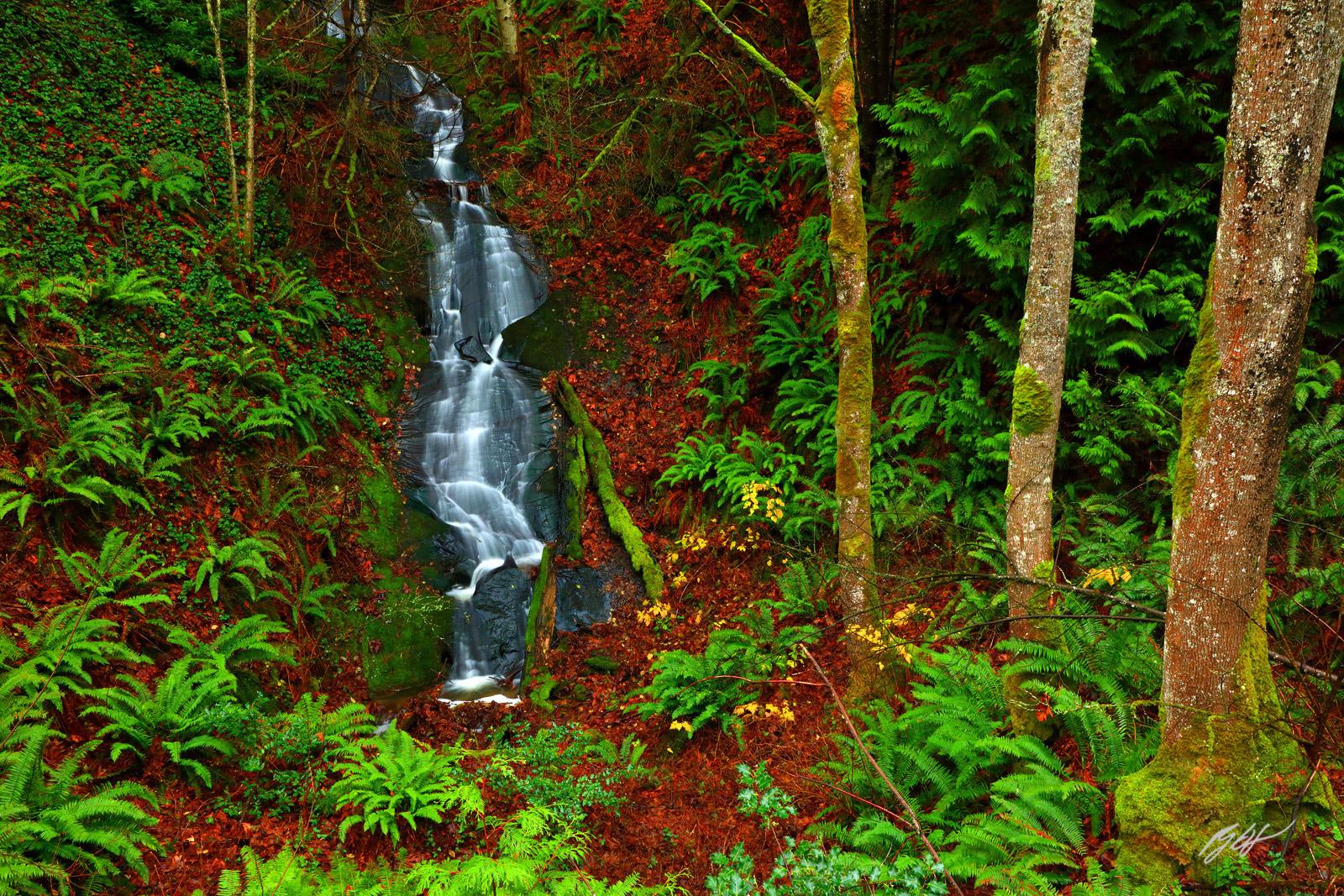 Chuckanut Drive & Larrabee State Park Fossil Hunting GuideFossil palm fronds (Sabalites), Fossil leaves
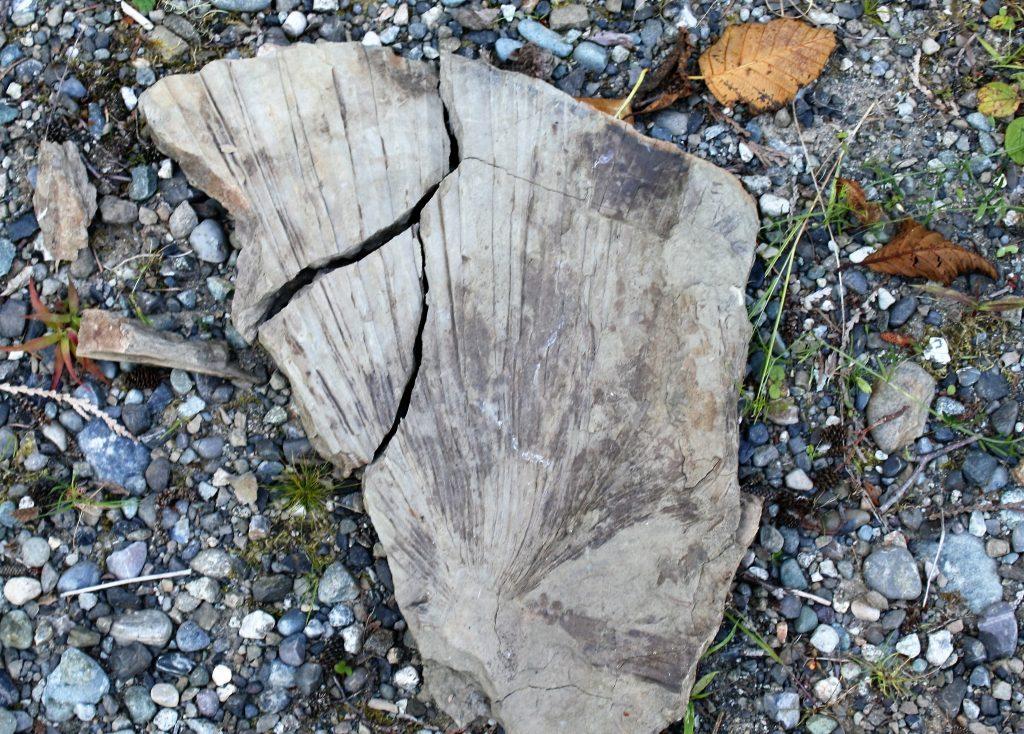 Racehorse Creek Chuckanut Fossil Fields Hunting GuideFossil palm fronds (Sabalites), Tree fern fronds (Cyathea pinnata)
 Ginkgo Petrified Forest State Park Fossil Hunting GuidePetrified wood (Ginkgo), Petrified wood (50+ species)