Rødvig Beach Fossil Hunting Guide
Rødvig sits at the southern end of Stevns Klint, the UNESCO World Heritage chalk cliff on the east coast of Zealand, and it is the easiest entry point on.
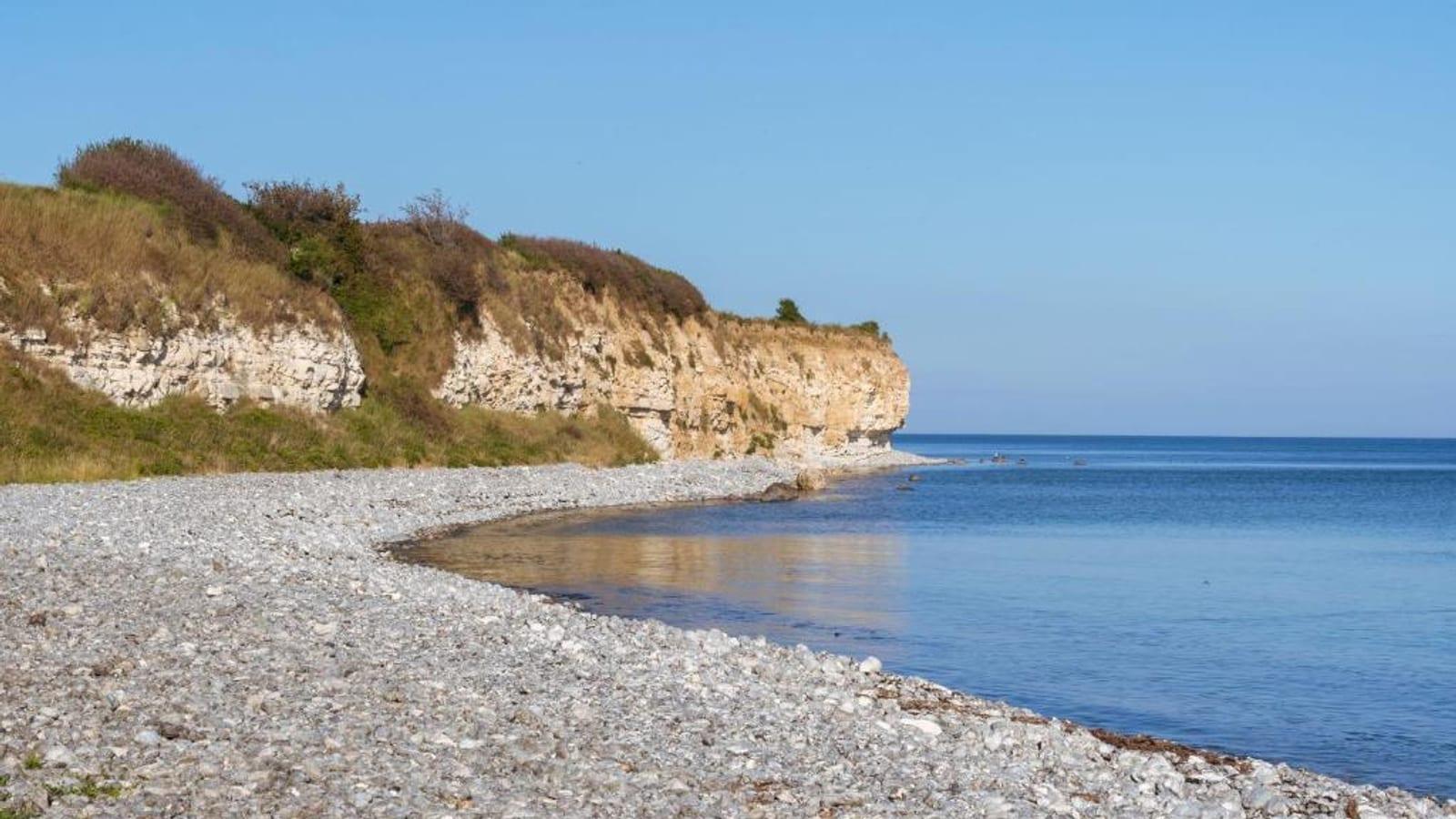
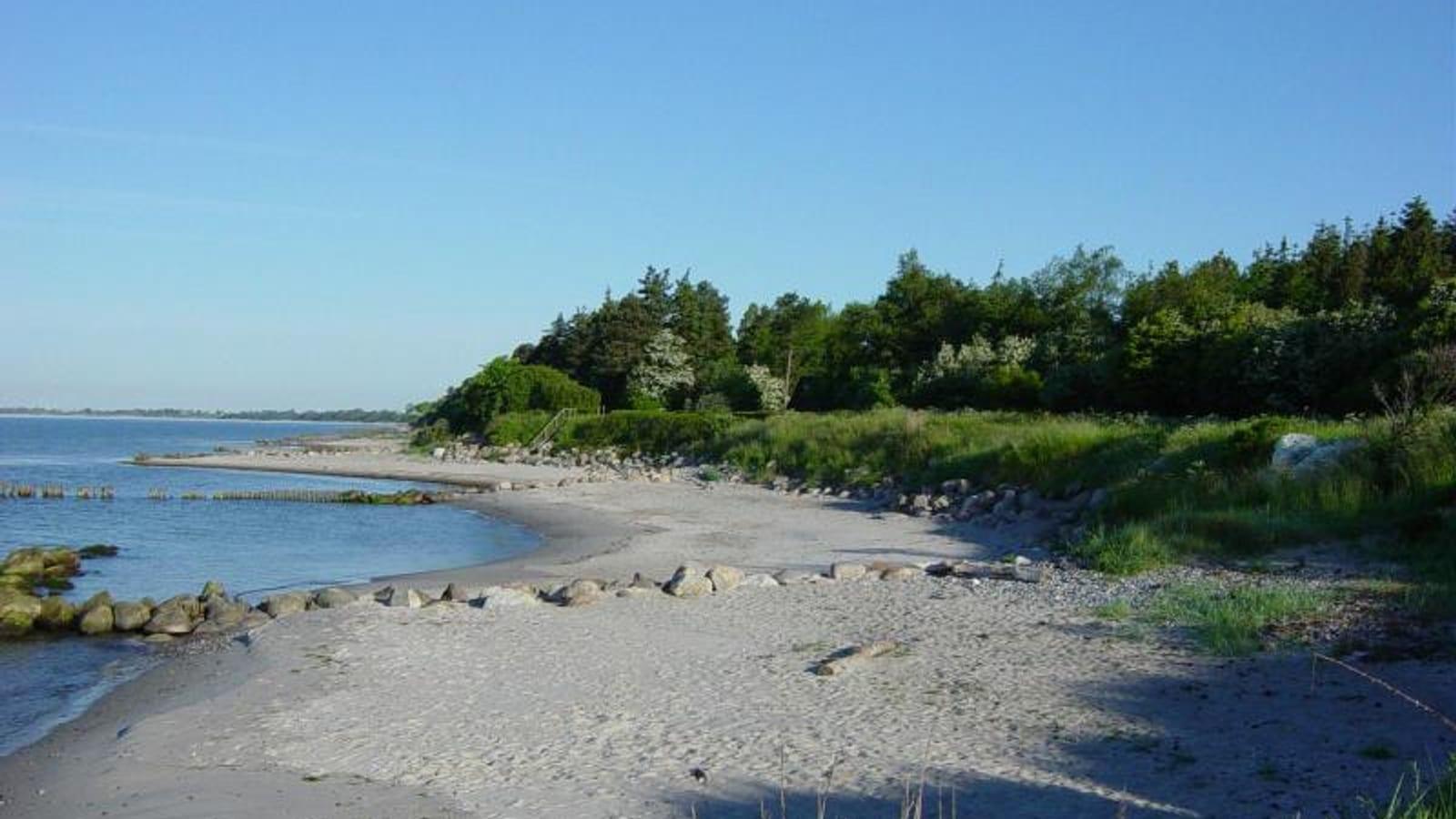
Rødvig sits at the southern end of Stevns Klint, the UNESCO World Heritage chalk cliff on the east coast of Zealand, and it is the easiest entry point on the whole klint. The harbour car park is a few steps from the beach, and from there a level walk on sand and chalk gravel takes you north under cliffs that rise from around 5 metres at the harbour to over 40 metres further along. Belemnites are the headline find, and they come out of the chalk by the dozen on a typical visit. Sea urchins, brachiopods, bryozoans, bivalves, and the occasional shark tooth or fish vertebra round out the haul. The chalk here is Late Maastrichtian, just below the famous K-Pg boundary that draws scientists to the cliff face at Højerup further north. This guide covers how to get to Rødvig, what to look for in the loose material on the beach, the chalk geology, and the rules that govern collecting on a UNESCO-protected coast.
Location and Directions
Rødvig is a working fishing village on the southern tip of the Stevns peninsula, around 65 kilometres south of Copenhagen.
By car, take the E20 motorway south of Copenhagen, exit at Køge, and follow Route 209 east through Hårlev to Rødvig. The drive takes about an hour from central Copenhagen. Park in the harbour car park (Rødvig Havn, 4673 Rødvig), which is large, free, and signposted from the village centre. By public transport, take the regional train from Copenhagen Central or Køge to Rødvig station (the line terminates at Rødvig). From the station it is a short walk to the harbour and the beach.
Walk to the harbour mouth and head north along the shoreline. The chalk cliffs begin almost immediately and rise as you walk. The Trampestien (a cliff-top footpath) runs above you for the full length of the klint and gives you alternate access points if you want to drop down to the beach further along; the next staired access at Højerup is about 5 kilometres north. The first kilometre of beach from Rødvig harbour gives the easiest, most productive collecting and is the best section for families and casual visitors.
The Baltic has very small astronomical tides, but real wind-driven changes in water level. Strong westerly winds drop the water and expose more shore; easterlies and southerly storm surges cover it. Avoid the cliff base in onshore winds, after rain, and during freezing or thawing weather, when chalk and flint blocks come down without warning.
What Fossils You'll Find
The chalk produces a consistent fauna, and almost everything you find at Rødvig will be loose material on the beach.
- Belemnites. The dominant find. The cylindrical, cigar-shaped guards of Belemnitella and Belemnella species weather out of the chalk and are scattered along the foreshore by the hundreds. Sizes range from 3 to 12 centimetres. Local Danish folklore knows them as vættelys, "thunderstones."
- Sea urchins. Regular and irregular echinoids, both as complete tests (often small) and as isolated spines and plates. Echinocorys and Tylocidaris are the common genera; Tylocidaris spines are the heavy, club-shaped objects you may notice in the gravel.
- Brachiopods. Small terebratulid and rhynchonellid shells, often complete and well preserved.
- Bryozoans. Lace-like and twiggy colonies are abundant; many of the chalk pebbles you pick up are essentially bryozoan rubble.
- Bivalves. Mostly preserved as moulds. Inoceramid flakes (mother-of-pearl-style chips of large clam shell) are common.
- Flint nodules. Black to grey flint runs in bands through the chalk and occurs as loose nodules on the beach. Many flints contain sponge or echinoid moulds in their cores.
- Shark teeth and fish vertebrae. Small and rare, but real. Most are Squalicorax or small lamniform teeth.
Stevns Museum at Højerup runs a free identification service if you find something you cannot place.
Geologic History
The cliffs at Rødvig expose the upper Maastrichtian chalk of the Møns Klint Formation, deposited in the final 3 to 4 million years of the Cretaceous, roughly 70 to 66 million years ago. This is the same chalk unit that runs the length of Stevns Klint and continues offshore.
The chalk is made almost entirely of microscopic calcium carbonate plates from coccolithophore algae, single-celled phytoplankton that lived in vast numbers in the surface waters of the Late Cretaceous sea. As they died, their tiny plates rained down and accumulated on the seafloor at roughly 2 to 3 centimetres per thousand years. Most chalk samples are over 95 per cent calcium carbonate, which tells you how clean the water was and how little clay or sand was reaching this part of the shelf. Water depth at Rødvig was around 100 to 150 metres. Bottom-dwelling life was diverse and oxygen levels were good: burrowing bivalves, attached brachiopods and bryozoans, and free-roaming sea urchins all thrived. Belemnites, squid-like animals with calcite internal shells, swam in the water column above and contributed the guards that now dominate the beach.
The black flint bands you see in the cliff face formed later, after burial, when silica from sponge spicules dissolved and reprecipitated as cryptocrystalline quartz along bedding planes and around fossils.
The Cretaceous-Paleogene boundary itself sits in the upper part of the cliff at Højerup, about 5 kilometres north, where a thin grey-green clay marks the asteroid impact horizon and overlies the Cerithium Limestone of the basal Danian. At the Rødvig section you are below the boundary, in normal Late Cretaceous chalk. To see the boundary itself, walk north on the Trampestien to the Højerup viewpoint or visit the Stevns Klint Experience visitor centre.
The cliff's modern shape is the product of relentless Baltic erosion. Wave action undercuts the chalk, blocks fall, and the foreshore is restocked with fresh fossiliferous material every winter. This is why surface collecting is so productive: erosion does the extraction work for you.
How Rødvig Became a Fossil Collecting Site
Rødvig has been a fishing harbour since at least medieval times, and the harbour gave 18th and 19th century geologists a base from which to work the chalk cliffs. Early fossil collecting at Stevns Klint dates to the 1700s, and the village's level beach access made it a natural collecting starting point long before the Højerup section drew international attention for the K-Pg boundary. Detailed Danish stratigraphic work in the late 1800s and early 1900s established the Stevns Klint chalk as a reference section for the Upper Maastrichtian.
In 1980, Walter and Luis Alvarez and colleagues used the iridium anomaly at the Højerup boundary as one of the original lines of evidence for the asteroid-impact hypothesis. That work eventually led to the 2014 UNESCO World Heritage designation for the entire Stevns Klint cliff, which includes the Rødvig section. The Stevns Klint Experience visitor centre opened at Højerup in 2024 and now serves as the main interpretive hub for the whole site. Rødvig itself remains primarily a working fishing harbour with a casual collecting beach attached.
Collecting Rules and Regulations
Rødvig is a free, 24-hour, year-round beach access point, but it is part of a UNESCO World Heritage site, and the rules reflect that.
- Do not hammer or dig the cliff face. The chalk is protected, the cliffs are unstable, and direct extraction is the activity the rules are written against. Surface collection of loose, already-eroded material on the beach is fine and is the normal way to collect here.
- Stay at least 10 metres from the base of the cliff. Rockfall happens without warning, and chalk and flint blocks have killed visitors in the past. Watch overhead, and avoid the cliff base after rain or during freeze-thaw conditions.
- Personal-collection quantities are accepted; commercial-scale collecting is not. Significant or unusual finds (articulated vertebrate material, complete urchins, shark teeth larger than a few centimetres) should be reported to the Stevns Museum in Store Heddinge or the Stevns Klint Experience centre.
- Wear sturdy shoes. The beach is a mix of chalk gravel, large flint nodules, and sharp shell debris that cuts through soft footwear.
- Watch wind-driven Baltic water levels rather than standard tides. Strong onshore winds reduce the available beach.
- Dogs are allowed on the beach outside the main summer holiday weeks; check current municipal rules during July and August.
- Pack out litter. There are no bins on the beach itself.
- Restrooms, restaurants, and small shops are available year-round at Rødvig harbour. Free parking is in the harbour lot.
Sources
- UNESCO World Heritage Centre. "Stevns Klint." https://whc.unesco.org/en/list/1416
- Stevns Klint Experience. "Visitor information." https://stevnsklint.com/
- Geological Survey of Denmark and Greenland (GEUS). "Stevns Klint and the K-Pg boundary." https://www.geus.dk/
- Surlyk, F. and others. "The Maastrichtian chalk of Stevns Klint." Bulletin of the Geological Society of Denmark, various.
- Stevns Museum. "Fossils of Stevns Klint." Identification guide.
Nearby sites
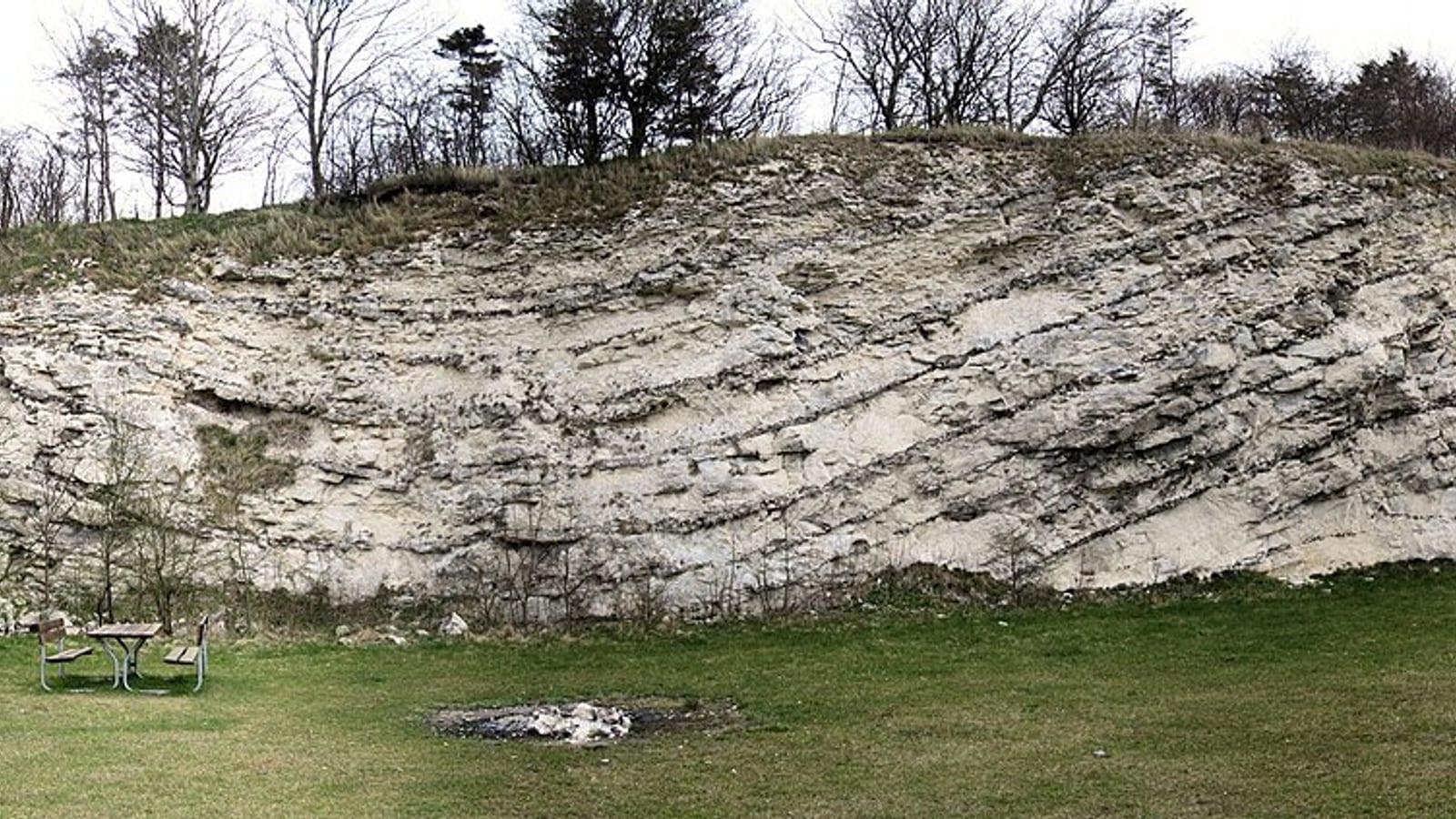 Boesdal Beach Stevns Klint Fossil Hunting GuideBelemnites, Sea urchin
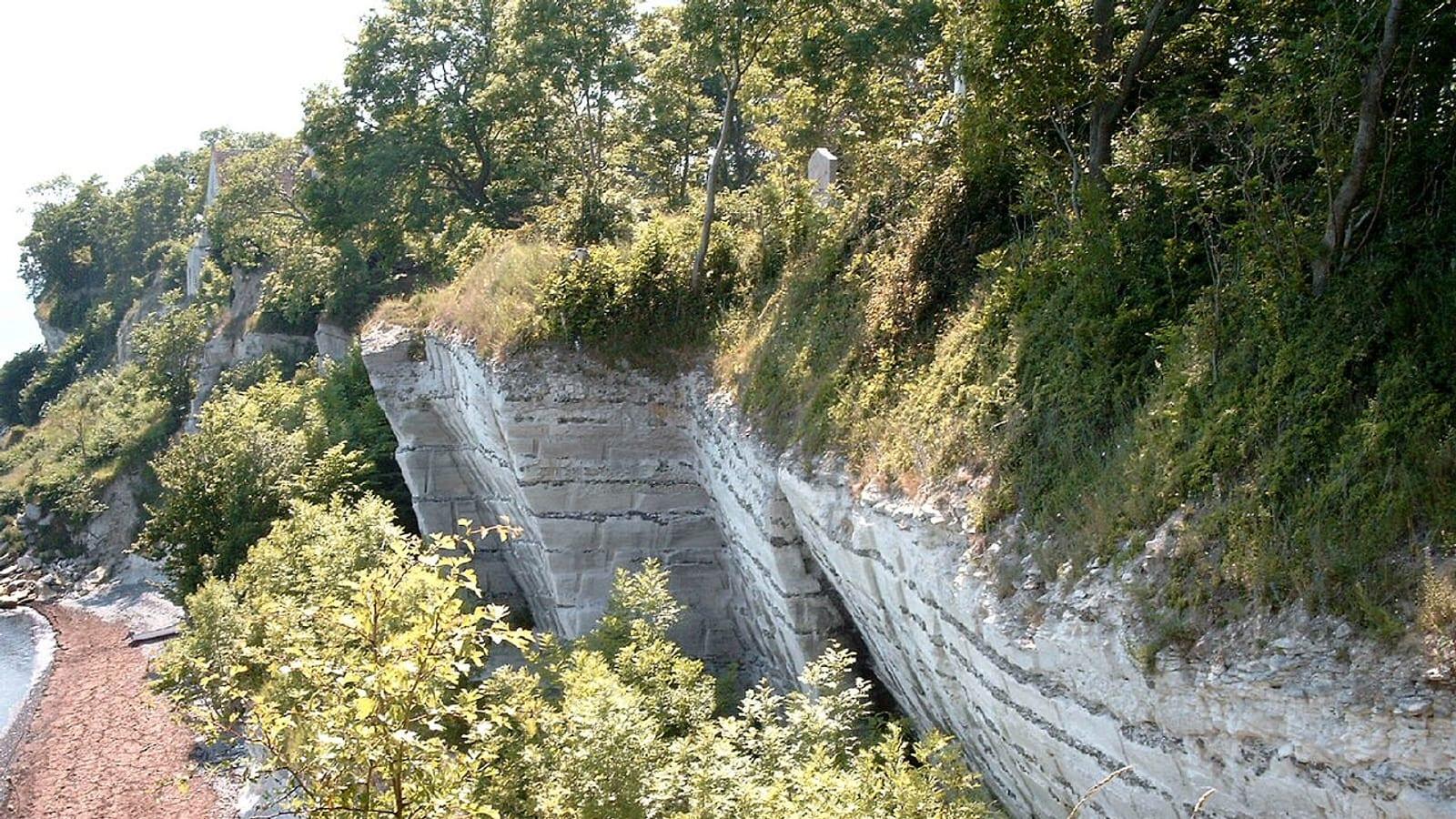 Stevns Klint Hoejerup k pg Boundary Fossils Fossil Hunting GuideHøjerup Church, Belemnites
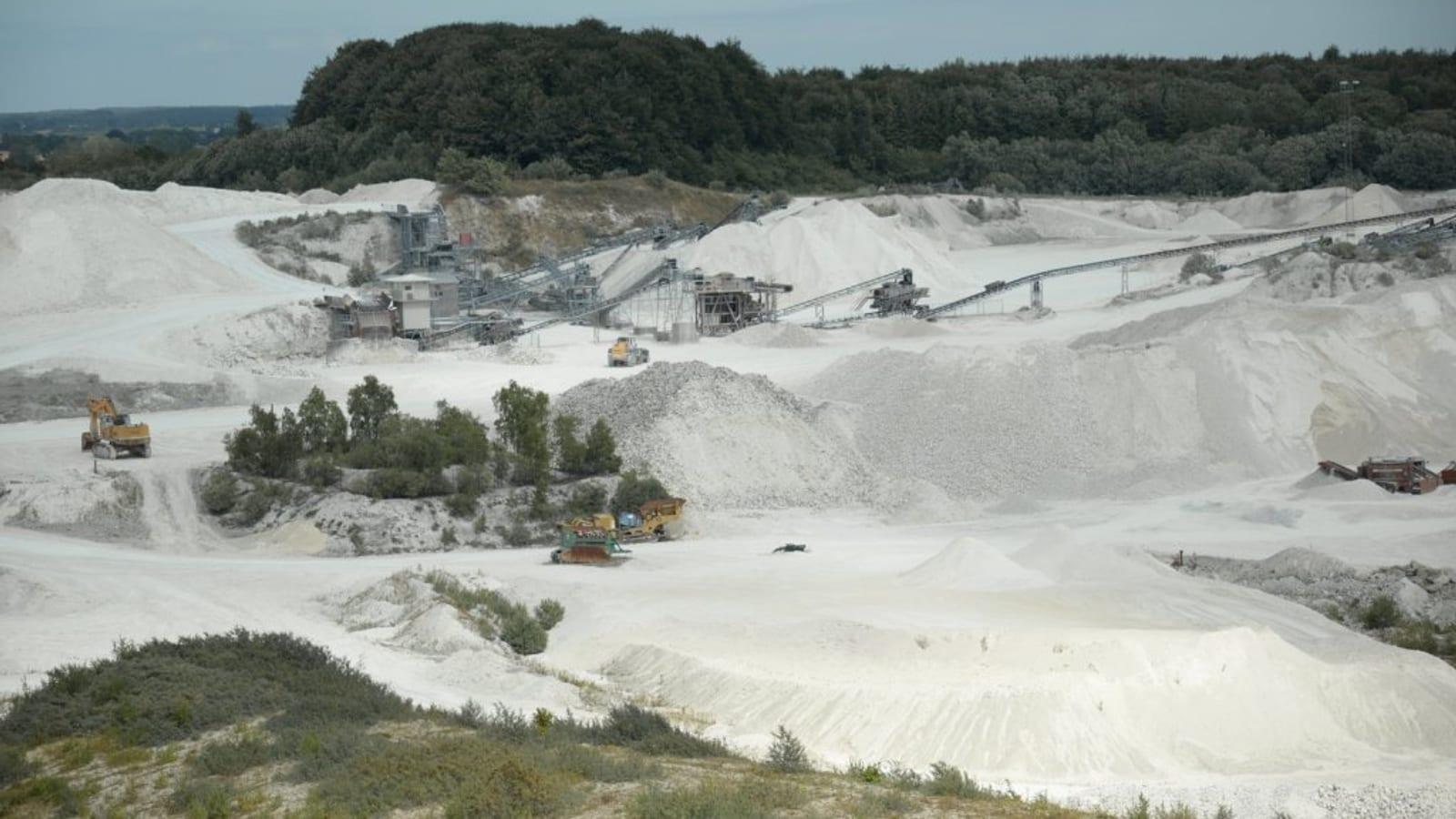 Faxe Quarry South Area Fossil Hunting GuideCorals, Crabs
 Store Klint Mons Klint Tallest Cliffs Fossils Fossil Hunting GuideBelemnites, Sea urchin