Shark Tooth Hill Fossil Hunting Guide
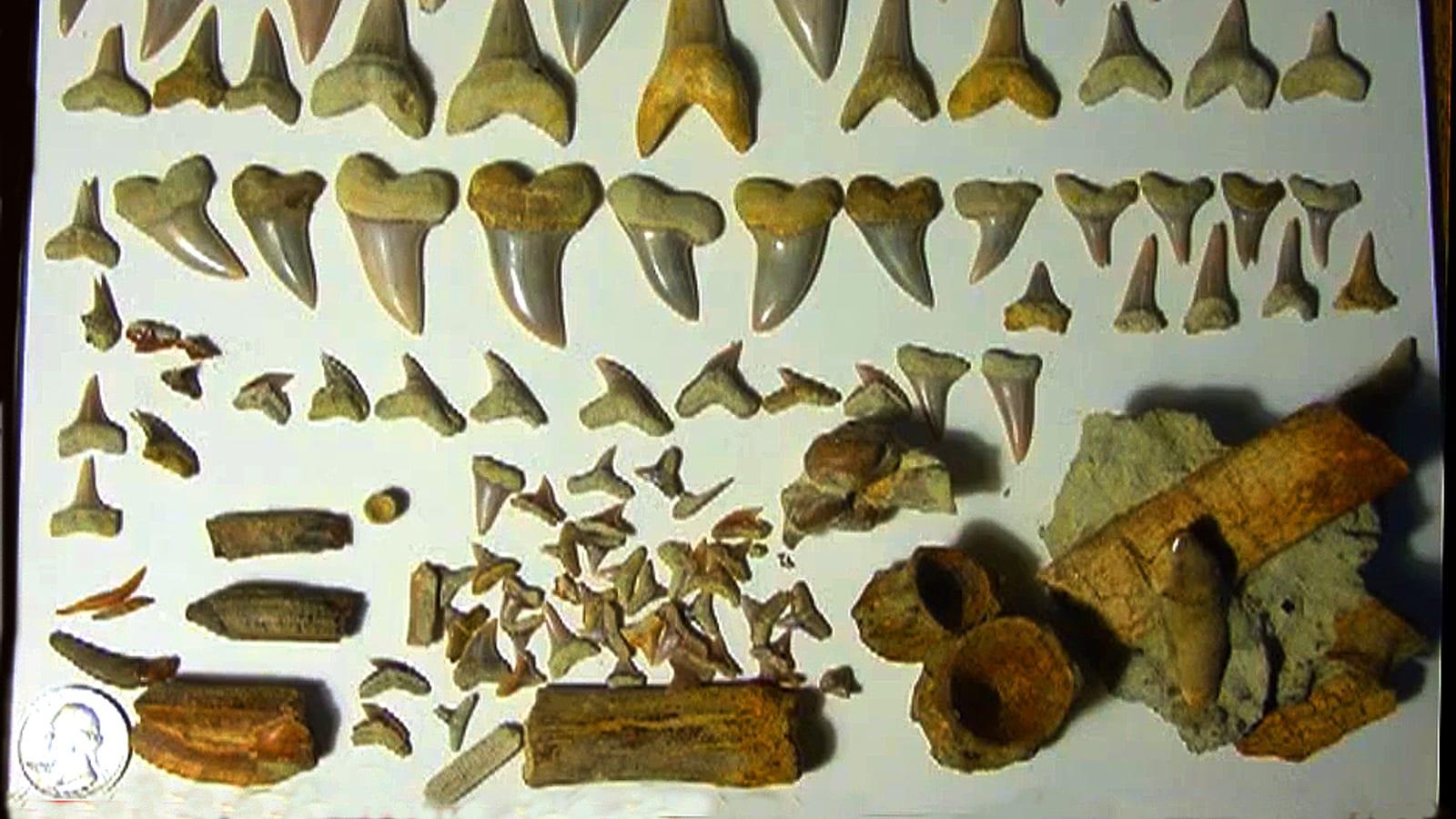
One of the most well known and prolific fossil sites in California , Shark Tooth Hill is a reliable source of shark teeth and the fossils of over 175 marine species.
Shark Tooth Hill is a low ridge of eroding sedimentary rock in the foothills east of Bakersfield, California, and it contains what is widely regarded as the densest concentration of Miocene marine fossils in the state. The site exposes the Round Mountain Silt Member of the Temblor Formation, a bone-bed unit that preserves over 175 marine species in a compact stratum roughly 50 centimetres thick. Shark teeth are the dominant find — megalodon teeth are the prize, though smaller species are far more common — but the bone bed also produces whale vertebrae, dolphin skulls, sea lion remains, ray dental plates, bony fish material, and the occasional bird bone. The site is on private land and has been managed for supervised public digs by the Buena Vista Museum of Natural History in Bakersfield. Participants keep everything they find, which makes this one of the few places in California where a member of the public can legally collect a megalodon tooth in the field.
Location and Directions
Shark Tooth Hill is located approximately 15 miles (24 km) east of central Bakersfield, in Kern County. The site sits off Bear Mountain Boulevard in the hills east of the Kern River valley.
Access to the site is through the Buena Vista Museum of Natural History, located at 2018 Chester Avenue, Bakersfield, CA 93301 (phone: 661-324-6350). Dig days are not walk-in events; you must register in advance through the museum. The museum coordinates transport to the site or provides precise directions to participants. Bakersfield is approximately 110 miles (177 km) north of Los Angeles via I-5 and Highway 99, and approximately 300 miles (483 km) south of San Francisco. The nearest major airport is Meadows Field (BFL) in Bakersfield. There is no public transport to the site itself.
Check the Buena Vista Museum website for the current dig-day calendar before planning a visit. Digs typically run on weekends from spring through early summer; the schedule varies year to year based on landowner agreements and site conditions. Dig fees apply and are set by the museum.
What Fossils You'll Find
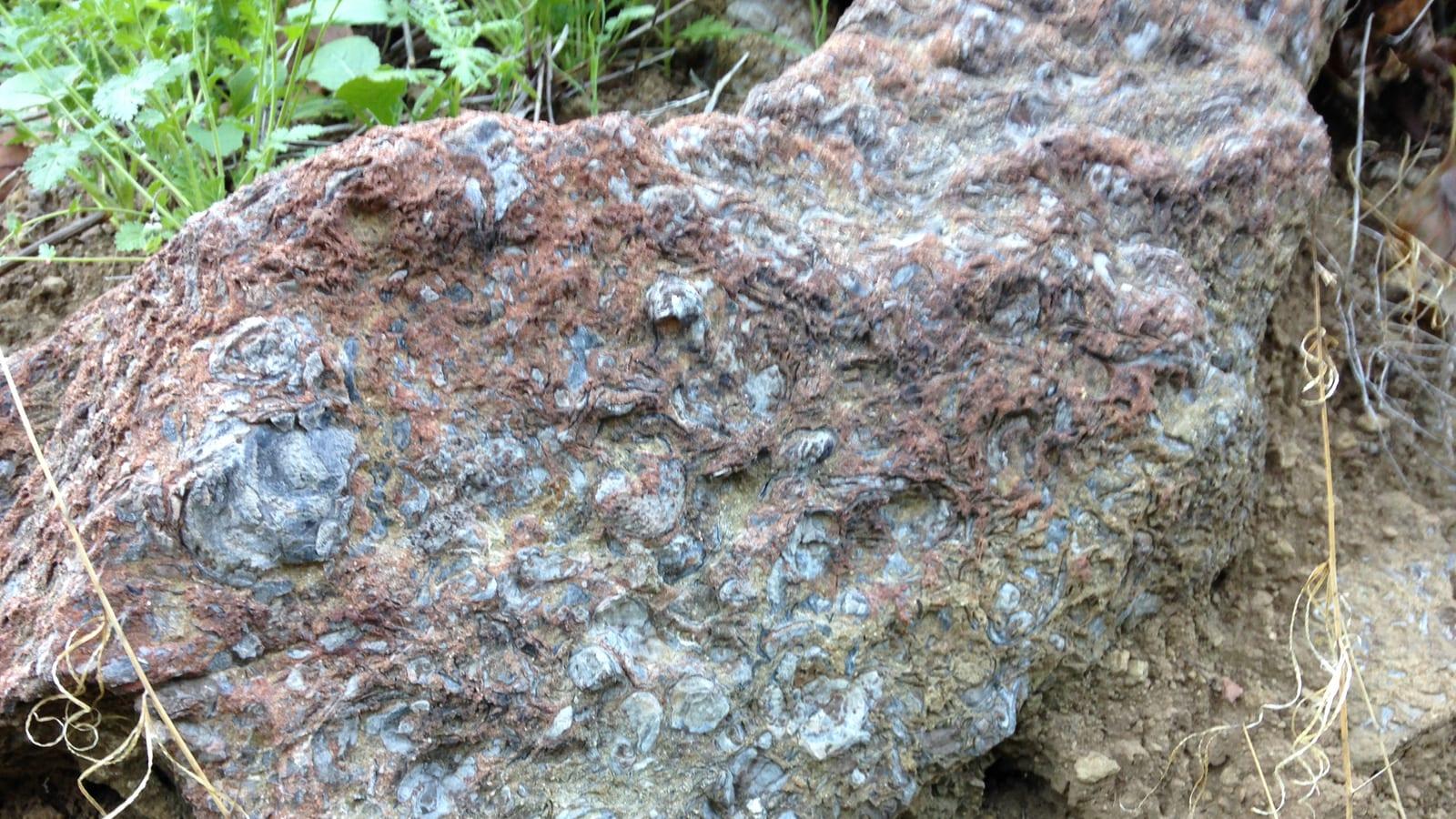
The Round Mountain Silt bone bed is a concentrated accumulation rather than a thin scatter, and the density of material is immediately visible once you begin surface-scratching the soft silt.
- Megalodon teeth (Otodus megalodon). Shark Tooth Hill is the type locality for this species in California. Complete teeth exceed 15 centimetres in length; most finds are partial or worn, but even fragments are recognisable by the coarse serrations and characteristic cross-section. Shark Tooth Hill was formally described as a type locality for megalodon when the species was still classified as Carcharocles megalodon.
- Mako shark teeth (Cosmopolitodus hastalis and Isurus planus). The smooth-edged, laterally curved teeth of C. hastalis are one of the most common finds and are often complete. Isurus planus teeth are flatter and less common.
- Ray dental plates. Flat, hexagonal crushing plates from myliobatid rays are scattered throughout the bone bed and are easy to identify by their smooth, enamel-capped surface.
- Whale vertebrae and ribs. Large cetacean material occurs throughout the unit; vertebral centra can be football-sized.
- Dolphin skulls and teeth. Several odontocete species have been described from the site; teeth and skull fragments are found on dig days.
- Sea lion and fur seal bones. Pinniped material including limb bones and isolated teeth.
- Bony fish vertebrae and otoliths. Small vertebrae and ear stones from schooling fish are common in the silt matrix.
The site has also produced rare marine bird material and occasional land-derived plant remains washed into the basin.
Geologic History
The Round Mountain Silt Member was deposited during the Middle Miocene epoch, approximately 15 to 16 million years ago, in a shallow embayment of the Pacific Ocean that extended inland across what is now the southern San Joaquin Valley. Kern County at this time sat at the northeastern margin of a warm, productive subtropical sea. Water depth in the Shark Tooth Hill area was probably between 50 and 200 metres, based on the benthic fauna and sedimentary structures preserved in the unit.
The remarkable bone-bed density is unusual even for a rich marine unit. Several hypotheses have been proposed: localised upwelling that drove exceptional biological productivity, periodic toxic events that killed large numbers of animals simultaneously, or a quiet-water depositional environment that accumulated skeletal material from a wide catchment area over a short geologic interval. The bone bed itself is a distinct and laterally consistent stratum, suggesting a relatively rapid accumulation event rather than slow background deposition.
After deposition, the sediments were buried under younger Miocene and Pliocene units, then gently uplifted by compressional tectonics associated with the San Andreas Fault system to the west. Erosion of the overlying softer sediments has re-exposed the bone bed at the surface of the present ridge, where it is now being eroded naturally and excavated by palaeontologists and supervised dig participants.
Collecting Rules and Regulations
Shark Tooth Hill is private land. Access is only permitted through organised dig days coordinated by the Buena Vista Museum of Natural History. There is no self-guided or walk-in access to the site.
All participants must register in advance through the museum and pay the applicable dig fee. Children are welcome on dig days but must be accompanied by an adult throughout. The museum provides supervision and, on most dig days, staff who can help identify finds on site. Participants keep all fossils they collect during the dig — there are no restrictions on taking material home. Significant or scientifically important specimens (articulated skeletons, complete skulls) may be flagged by museum staff for further study, but the general participant keeps their routine finds.
Wear sturdy closed-toe shoes, bring a hat, sunscreen, and at least 2 litres of water per person. The site is exposed hillside with no shade and temperatures in the San Joaquin Valley regularly exceed 38°C (100°F) in summer. Small collecting bags or zip-lock bags, a hand lens, and a soft brush are useful; the museum may provide basic tools on dig days. Do not access the site outside of officially organised dig events.
Contact the Buena Vista Museum of Natural History at 661-324-6350 or through their website to check current dig schedules and fees.
Sources
- Buena Vista Museum of Natural History. "Shark Tooth Hill Digs." https://www.buenavistamuseum.org
- Pimiento, C., and others. "Distribution of Carcharodon megalodon over space and time." PLoS ONE, 2010.
- Demere, T.A., and Cerutti, R.A. "A Miocene shark fauna from the Oceanside area, California." PaleoBios, 1982.
- USGS. "Geology of the Bakersfield foothills." Various reports.