La Brea Tar Pits Fossil Hunting Guide
Background: The pits are composed of heavy oil fractions called gilsonite, which emerged from the Earth as oil.
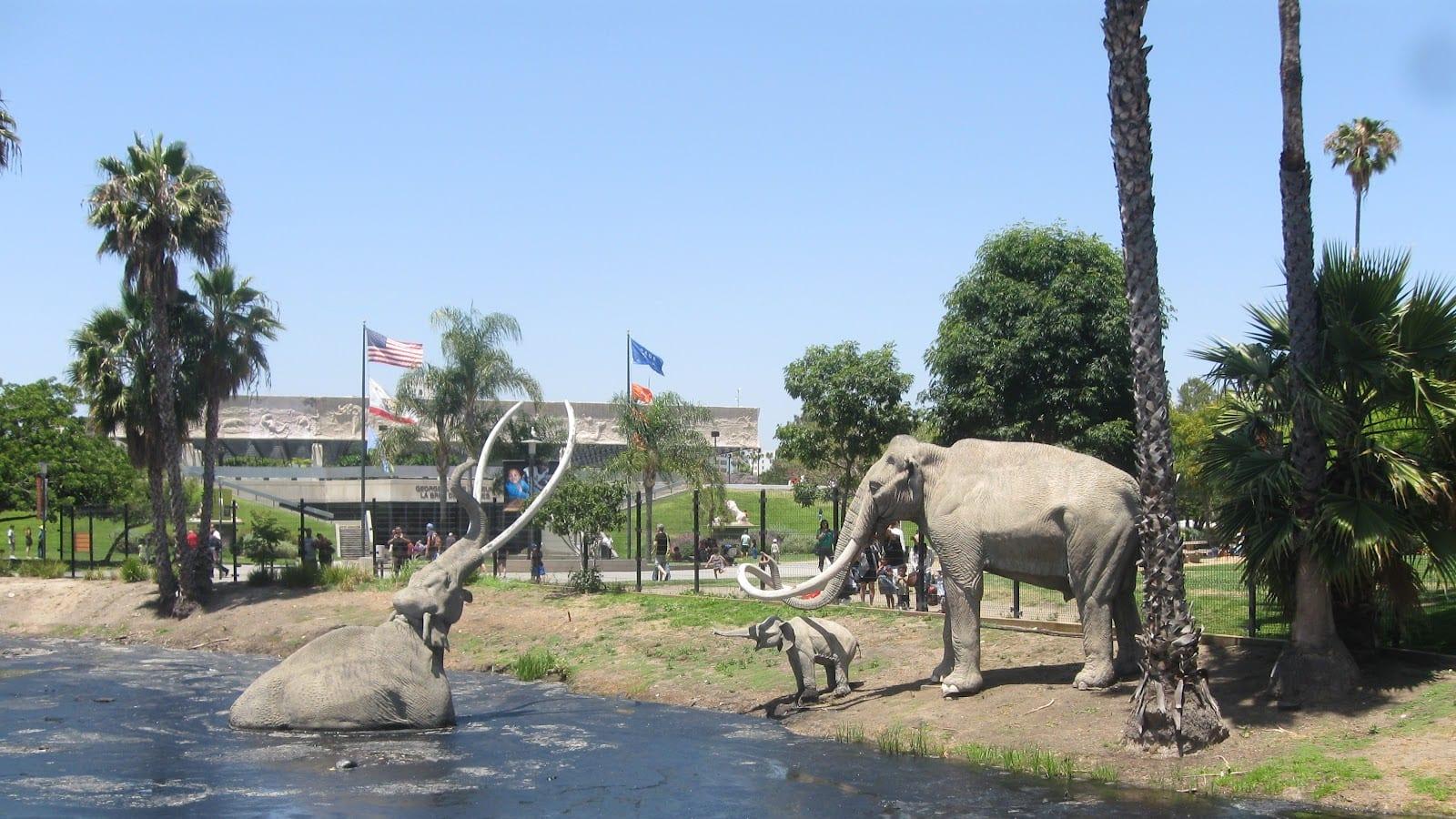
La Brea Tar Pits sits in the middle of the Miracle Mile district of Los Angeles, at 5801 Wilshire Boulevard, and it is the most productive urban Pleistocene fossil site in the world. The asphalt seeps here have been trapping and preserving animals for at least 50,000 years, and the bones that accumulate in the tar are in exceptional condition — dense, dark-stained, and often complete. Over 600 species have been identified from the deposits, spanning large mammals, birds, reptiles, insects, plants, and molluscs. The George C. Page Museum, built directly over the excavation area, displays thousands of specimens and runs active palaeontological work that visitors can watch in progress. This is not a collecting site — no fossil removal is permitted under any circumstances — but it offers something few places can: the chance to watch professional palaeontologists excavating real specimens in real time, then walk inside to see where those specimens end up.
Location and Directions
La Brea Tar Pits is located at 5801 Wilshire Boulevard, Los Angeles, CA 90036, in the Miracle Mile neighbourhood of mid-city Los Angeles, adjacent to the Los Angeles County Museum of Art (LACMA).
By car from downtown Los Angeles, take Wilshire Boulevard west for approximately 6 miles (10 km). The site is on the south side of Wilshire between Curson and Ogden. Parking is available in the LACMA garage on Ogden Drive; metered street parking is also available along Sixth Street and adjacent side streets. By public transport, Metro Bus lines 20 and 720 run along Wilshire Boulevard and stop directly in front of the site. From Hollywood, the Metro B Line (Red) to Wilshire/Western station connects to the 720 bus westbound. The site is open daily; check the museum website for current seasonal hours. Museum admission is approximately $18 for adults and $7 for children aged 3 to 12; children under 3 are free. Los Angeles County residents qualify for free general admission on select days each month. The outdoor asphalt lake area and the pit overlooks are accessible without a museum ticket.
What You'll See
La Brea contains an extraordinary cross-section of Pleistocene megafauna from roughly 50,000 to 11,000 years ago. No collecting is permitted, but the active excavations and museum displays put the fossils in direct view.
- Dire wolves (Aenocyon dirus). The most common large mammal in the collection, with remains from more than 3,600 individual animals recovered to date. The museum's dire wolf skull wall — 400 skulls arranged in a single display — is one of the most striking fossil exhibits in North America.
- Saber-toothed cats (Smilodon fatalis). The second most common large predator in the deposit. Thousands of individuals have been excavated, making La Brea the global reference collection for this species.
- Columbian mammoths (Mammuthus columbi). Remains of both adults and juveniles have been recovered, including large sections of tusk. The museum displays a nearly complete skeleton.
- American mastodons (Mammut americanum). Less common than mammoths at La Brea but well represented, with teeth and limb bones on display in the museum galleries.
- Ground sloths. Remains of Paramylodon harlani (Harlan's ground sloth) and Megalonyx jeffersonii (Jefferson's ground sloth) are both present; both species were large, heavily built animals fully capable of being mired in asphalt.
- Western horses (Equus occidentalis) and Californian camels (Camelops hesternus). Both are common at La Brea and document the horse and camel lineages that went extinct in North America at the end of the Pleistocene.
- Short-faced bears (Arctodus simus). The largest terrestrial mammalian carnivore in Pleistocene North America; recovered from several pits.
- Birds. Over 135 bird species have been identified, including the extinct La Brea condor (Gymnogyps amplus) and the abundant Merriam's teratorn (Teratornis merriami), a large vulture-like bird with a wingspan of approximately 3.5 metres (11.5 feet).
- Plants and insects. Intact plant material including seeds, cones, and wood fragments, along with thousands of insect specimens, provide a detailed picture of the local Pleistocene environment — coastal sage scrub with oaks, pines, and a climate broadly similar to today's.
Geologic History
The asphalt at Rancho La Brea is a natural petroleum product. Crude oil migrates upward through faults from oil-bearing strata deep beneath the Los Angeles Basin and seeps to the surface, where volatile fractions evaporate and the heavy residue — dense, sticky asphalt — pools in surface depressions. These seeps have been active for hundreds of thousands of years; the fossils recovered from scientific excavations date primarily to the period between 50,000 and 11,000 years ago, coinciding with the late Pleistocene megafaunal community and its collapse at the end of the last ice age.
The trapping mechanism is simple: an animal walks onto what appears to be a shallow puddle covered with water, dust, or leaves, sinks into adhesive asphalt just a few centimetres deep, and cannot pull free. Struggling attracts predators and scavengers, which also become trapped. This is why carnivore remains outnumber herbivores in the deposit — predators arrived in large numbers at each trapped herbivore, and all were preserved. Once buried, asphalt acts as a long-chain hydrocarbon preservative that inhibits bacterial decomposition, saturates bone mineral, and maintains structural integrity for tens of thousands of years. Recovered bones are typically dark brown to black from asphalt impregnation and require careful solvent cleaning before study.
Active excavation continues today at Pit 91, which reopens for public viewing in summer, and at the Project 23 site, where fossil deposits discovered during LACMA parking garage construction in 2006 were encased in 23 large wooden boxes and transported to the site for excavation — viewable through glass windows in an on-site laboratory.
Visiting Rules and Regulations
La Brea Tar Pits is managed by the Natural History Museums of Los Angeles County. The rules are straightforward.
No fossil collecting is permitted under any circumstances. Removal of any fossil material from the site is a criminal offence under California state law and Los Angeles County ordinances. Visitors may not enter the active excavation areas (Pit 91 and the Project 23 enclosure) without authorisation. The outdoor lake and pit areas are accessible at all times during park hours; the museum interior requires a paid ticket. Photography is unrestricted throughout the outdoor grounds. Guided tours of the active excavation at Pit 91 run on a seasonal schedule, typically summer weekends — check the museum website for current dates before visiting. No tools, digging, or surface disturbance of any kind is allowed anywhere on the grounds.
Sources
- Natural History Museums of Los Angeles County. "La Brea Tar Pits and Museum." https://tarpits.org
- Stock, C. "Rancho La Brea: A Record of Pleistocene Life in California." Los Angeles County Museum, 1992.
- Friscia, A.R., and others. "Ecomorphology of the fauna at Rancho La Brea." Journal of Zoology, 2008.
- Natural History Museums of Los Angeles County. "Project 23." https://tarpits.org/project-23