Dinosaur State Park Fossil Hunting Guide
Image: Daderot (CC BY-SA 3.0)
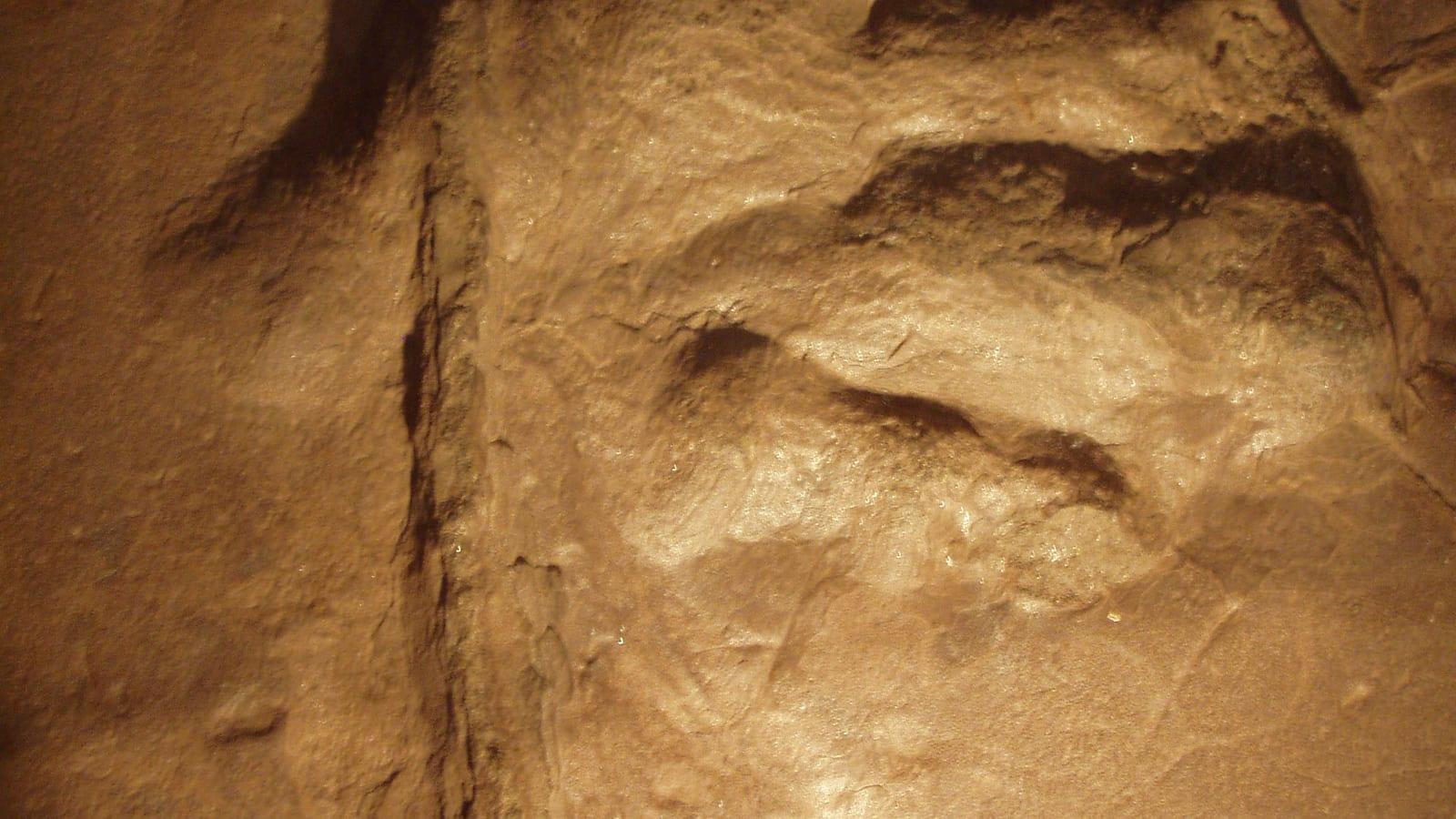
Dinosaur State Park in Rocky Hill, Connecticut preserves one of the largest in-place dinosaur trackways in North America under a single climate-controlled roof.
 Photo: Daderot — CC BY-SA 3.0 via Wikimedia Commons
Introduction
Dinosaur State Park in Rocky Hill, Connecticut preserves one of the largest in-place dinosaur trackways in North America under a single climate-controlled roof. In August 1966, a bulldozer clearing ground for a new state highway department building turned up the first Eubrontes prints on a freshly exposed bedding surface, and over the next several days roughly 2,000 three-toed dinosaur tracks were uncovered across about half an acre of brown sandstone. Connecticut shut down the construction project, designated the site a National Natural Landmark in 1968, and built a geodesic dome over the central track surface so visitors could walk the perimeter of the slab and see the prints in the rock where they were made. Around 500 tracks remain exposed under the dome; the rest were reburied for protection. The tracks are early Jurassic, made by predatory dinosaurs walking across the muddy margin of a long, narrow rift-valley lake about 200 million years ago. This guide covers how to reach the park, what you can examine inside the exhibit center, the geology of the East Berlin Formation, and the rules that govern a viewing-only state park with a small outdoor casting station.
"Outstanding examples of these New England dinosaur tracks can be seen at Dinosaur Trackway National Natural Landmark (NNL), within Dinosaur State Park and Arboretum in Rocky Hill, central Connecticut. The track layers are about 200 million years old, just after the beginning of the Jurassic." — National Park Service
Location and Directions
Dinosaur State Park is at 400 West Street, Rocky Hill, Connecticut 06067. The site sits on the western edge of Rocky Hill, about 10 miles south of Hartford and a few minutes off Interstate 91.
From Interstate 91, take Exit 23 (West Street, Rocky Hill). Turn west off the exit ramp onto West Street and follow signs for Dinosaur State Park. The entrance and parking are about a half mile from the interstate, on the south side of West Street. Parking is free in a paved lot at the visitor center. Overflow parking is available in a gravel lot during peak weekends.
From the parking lot, a short paved walkway leads to the exhibit center, the geodesic dome that covers the track surface, and the trailheads for the park's nature trails. The arboretum and 2.5 miles of marked nature trails wrap around the dome on the south and east sides of the property. Trails are open year round during park hours; the exhibit center is closed Mondays.
The exhibit center charges a per-person admission fee for adults, with reduced rates for children and seniors. Children under three are free. Confirm current admission and hours on the Connecticut DEEP state parks page before visiting, since seasonal hours and special events shift through the year.
The outdoor casting station operates on warm-weather days, generally May through October. Visitors may make plaster casts of a dedicated outdoor track replica using their own materials. Bring approximately 10 pounds of plaster of Paris and a quarter cup of cooking oil per cast (the oil is brushed into the track to release the plaster cleanly). Limited supplies are sometimes sold on site; check ahead. The casting station is closed in cold weather and during rain.
What Fossils You'll Find
 Photo: Daderot — CC BY-SA 3.0 via Wikimedia Commons
The trackway under the dome is a viewing-only exhibit. Three-toed (tridactyl) theropod tracks dominate the surface and fall into three named track types separated by size:
- Eubrontes giganteus. The largest tracks on the slab, typically 10 to 16 inches long, with three robust toe impressions and a narrow heel. Eubrontes is the Connecticut state fossil and was likely made by a large predatory dinosaur similar to Dilophosaurus or an early-Jurassic relative. No skeletons of the trackmaker have ever been found in the Connecticut Valley.
- Anchisauripus. Medium-sized tridactyl tracks roughly 4 to 8 inches long, made by smaller theropods of similar build.
- Grallator. Small theropod tracks under about 4 inches, often arranged in long, evenly spaced trails that record running animals.
Several extended trackways are visible under the dome, including one Eubrontes trail that runs nearly the full length of the slab. Sediment structures preserved on the same bedding plane help interpret the prints: ripple marks and mud cracks show the tracks were made on a soft, periodically exposed lakeshore mudflat that hardened in the sun and was later buried by fresh sediment.
The exhibit center surrounding the dome holds full skeletal mounts of Dilophosaurus and Coelophysis, Triassic and Jurassic plant fossils from the Connecticut Valley, and interactive displays on the rifting that shaped the trackway environment.
Geologic History
The track-bearing rock is the upper part of the East Berlin Formation, a unit of the early Jurassic Hartford Basin, dated to roughly 200 million years ago in the Hettangian to early Sinemurian stages. (Some older literature and signage in the Connecticut Valley refer to track-bearing red and brown sandstones generally as the Portland Formation, the next unit upsection. Modern stratigraphy places the Rocky Hill trackway specifically in the East Berlin Formation, with the Portland Formation overlying it.)
During the early Jurassic, the eastern margin of North America was breaking apart from Africa as the supercontinent Pangaea pulled open. A series of long, narrow rift basins developed along the future Atlantic coast. The Hartford Basin in Connecticut and Massachusetts was one of these, a fault-bounded valley filled by rivers, lakes, and floodplain mud. The climate was warm and seasonally wet, with monsoonal rainfall and long dry intervals.
The track surface formed on the muddy margin of a wide, shallow lake. As the lake level fell during a dry season, mud was exposed and dried in the sun, retaining ripple marks and incipient cracks. Theropods walking the lakeshore left clear, plastic prints in the firm mud. A subsequent flood event covered the surface with fresh sand and silt before the prints could be eroded away. Repeated burial cycles preserved hundreds of separate trackways stacked through the upper East Berlin section, with the Rocky Hill bedding plane being one of the richest single layers ever exposed.
The Hartford Basin was later tilted by post-rift subsidence and faulting. Modern erosion and the 1966 construction excavation removed the overlying glacial till and exposed the bedding plane essentially intact.
How Dinosaur State Park Became a Fossil Collecting Site
The Rocky Hill site is a building-foundation discovery, not a former industrial quarry. On 23 August 1966, bulldozer operator Edward McCarthy was clearing ground for a new Connecticut Highway Department building when he turned over a slab and noticed three-toed prints on the underside. The state geologist's office was called in, work was halted, and amateur and professional paleontologists, led by John Ostrom of Yale and a long roster of volunteers, spent the next several months mapping more than 2,000 tracks across roughly 20,000 square feet of bedding surface.
The state purchased the parcel, set the highway building elsewhere, and committed to preserving the trackway in place. The site was designated a National Natural Landmark by the National Park Service in 1968, and Dinosaur State Park opened to the public the same year. The current geodesic dome over the central track surface was constructed in 1976 and 1977 to enclose the climate-sensitive sandstone. Tracks outside the dome footprint were carefully reburied with sand, fabric, and soil to protect them from weathering, with the understanding that future generations may choose to re-expose them.
Collecting Rules and Regulations
Collecting is not permitted. Dinosaur State Park is a Connecticut state park managed by the Department of Energy and Environmental Protection (DEEP). Removing rocks, fossils, plants, or any natural material from a Connecticut state park is prohibited under state park regulations. This is a viewing-only fossil site.
Practical rules:
- Do not touch the track surface inside the dome. Oils and abrasion from skin contact accelerate weathering of the soft sandstone. Lean on the railings, not the rock.
- Photography for personal use is welcomed throughout the dome, exhibit center, and grounds. Tripods may be restricted on busy days; ask staff if you intend to set one up.
- A per-person admission fee is charged at the exhibit center. Children under three are free.
- The exhibit center is closed Mondays. The dome and exhibits operate on shorter winter hours; the outdoor casting station is closed in cold weather. Confirm hours on the CT DEEP website before visiting.
- The outdoor casting station permits visitors to make plaster casts of an outdoor replica track. Bring 10 pounds of plaster of Paris and a quarter cup of cooking oil per cast; some supplies may be sold on site. The casting station is closed during rain.
- Pets are not allowed inside the exhibit center. Leashed dogs are welcome on the outdoor nature trails.
- Drones, metal detectors, and rock hammers are prohibited on park property.
Sources
- Connecticut Department of Energy and Environmental Protection, "Dinosaur State Park and Arboretum." https://portal.ct.gov/deep/state-parks/parks/dinosaur-state-park-and-arboretum
- Friends of Dinosaur State Park and Arboretum. https://dinosaurstatepark.org/
- National Park Service, National Natural Landmarks Program, "Dinosaur Trackway." https://www.nps.gov/subjects/nnlandmarks/site.htm?Site=DITR-CT
- Olsen, P.E., McDonald, N.G., Huber, P., and Cornet, B., 1992. "Stratigraphy and Paleoecology of the Hartford Basin, Connecticut and Massachusetts." Field Guide, State Geological and Natural History Survey of Connecticut.
- Ostrom, J.H., 1972. "Were Some Dinosaurs Gregarious?" Palaeogeography, Palaeoclimatology, Palaeoecology 11.
%20-%20prints.JPG)
