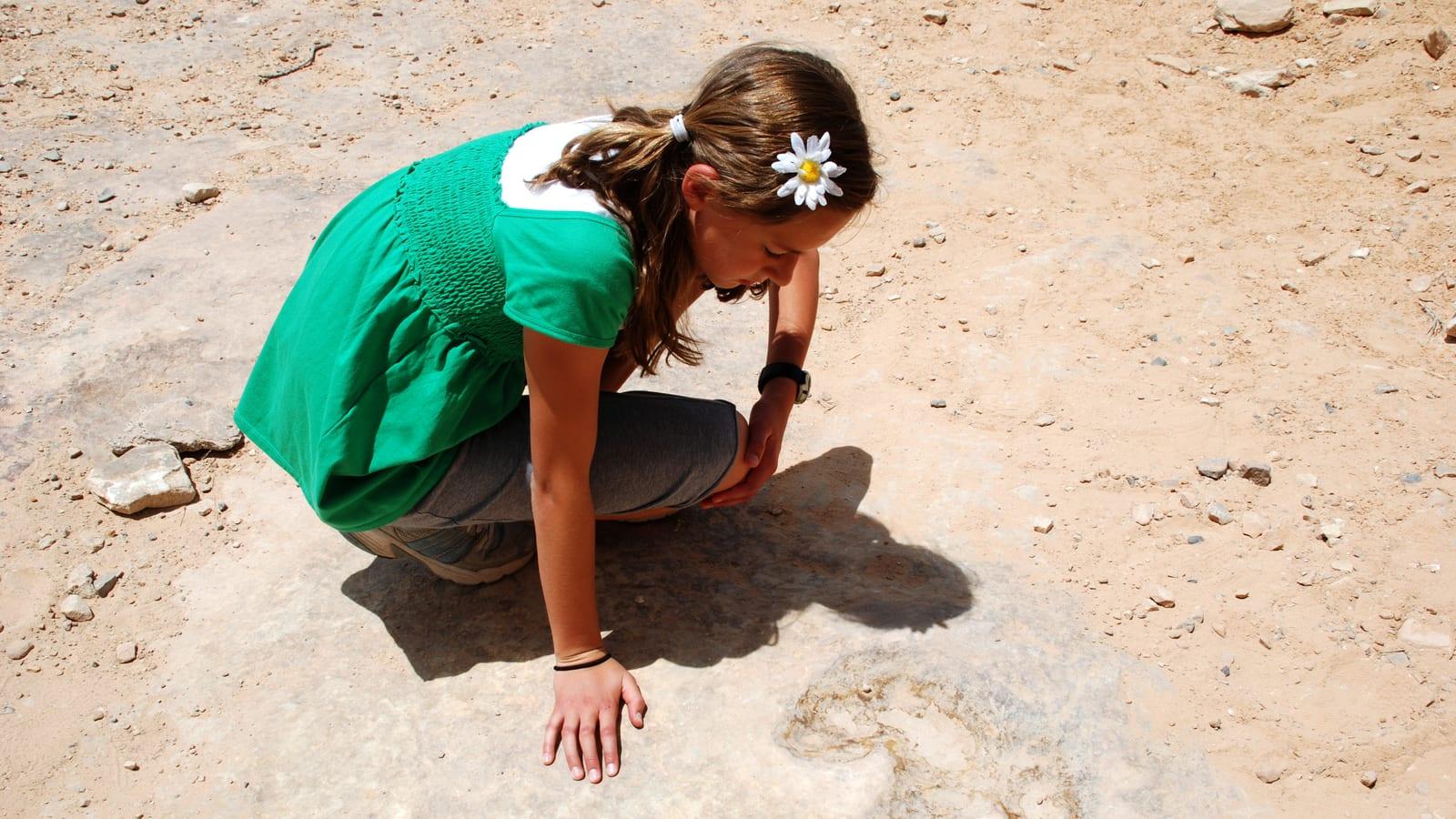
Cleveland-Lloyd Dinosaur Quarry Fossil Hunting Guide
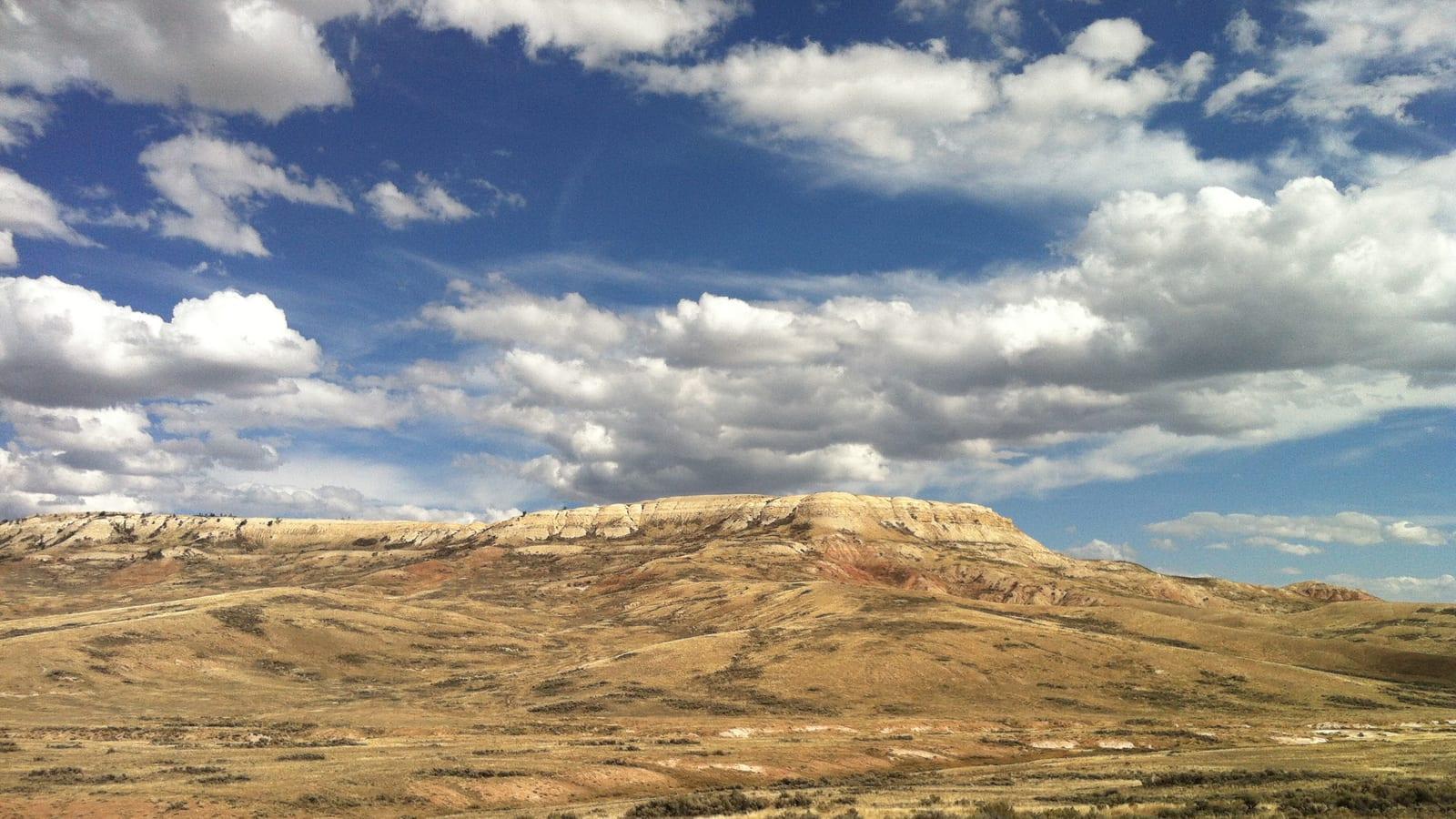
Image: BLMUtah (Public domain)
Cleveland-Lloyd Dinosaur Quarry sits on a low, juniper-scattered ridge in the San Rafael Swell of central Utah, about 30 miles south of Price.
 Photo: BLMUtah — Public domain via Wikimedia Commons
Introduction
Cleveland-Lloyd Dinosaur Quarry sits on a low, juniper-scattered ridge in the San Rafael Swell of central Utah, about 30 miles south of Price. The bone bed exposed here is the densest concentration of Late Jurassic dinosaur fossils ever found in a single quarry. More than 12,000 individual bones representing at least 74 dinosaurs have been removed from a few hundred cubic yards of rock since the 1920s, and roughly three out of every four of those animals are Allosaurus fragilis. The unusual ratio of predators to plant-eaters is the reason paleontologists still argue about how this assemblage formed, with theories ranging from a poison spring to a mired bog to a slow-moving flood deposit. In 2019 the quarry was incorporated into the new Jurassic National Monument, and the modern visitor experience centers on a covered quarry shelter where bones remain in the matrix exactly as they were uncovered. This guide covers how to reach the monument, what you will see in and around the quarry, the geology of the Morrison Formation here, and the rules that govern what is strictly a viewing-only site.
Location and Directions
The quarry and visitor center are on BLM land in Emery County, Utah, southeast of the small town of Cleveland.
The mailing address used by the BLM for the site is the Price Field Office, but the quarry itself is reached by following signed county and BLM roads. From Price, head south on Highway 10 for about 18 miles to the town of Elmo. Turn east on the signed county road toward Cleveland, then follow the brown BLM signs through Cleveland that point southeast toward the quarry. The route leaves pavement after Cleveland and continues for roughly 13 miles on a maintained gravel and dirt road. The total drive from Highway 10 to the quarry parking area is about 30 miles and takes 45 to 60 minutes in a passenger car under dry conditions. The road is graded but can become slick clay after rain or snow, and high-clearance vehicles are recommended whenever the surface is wet.
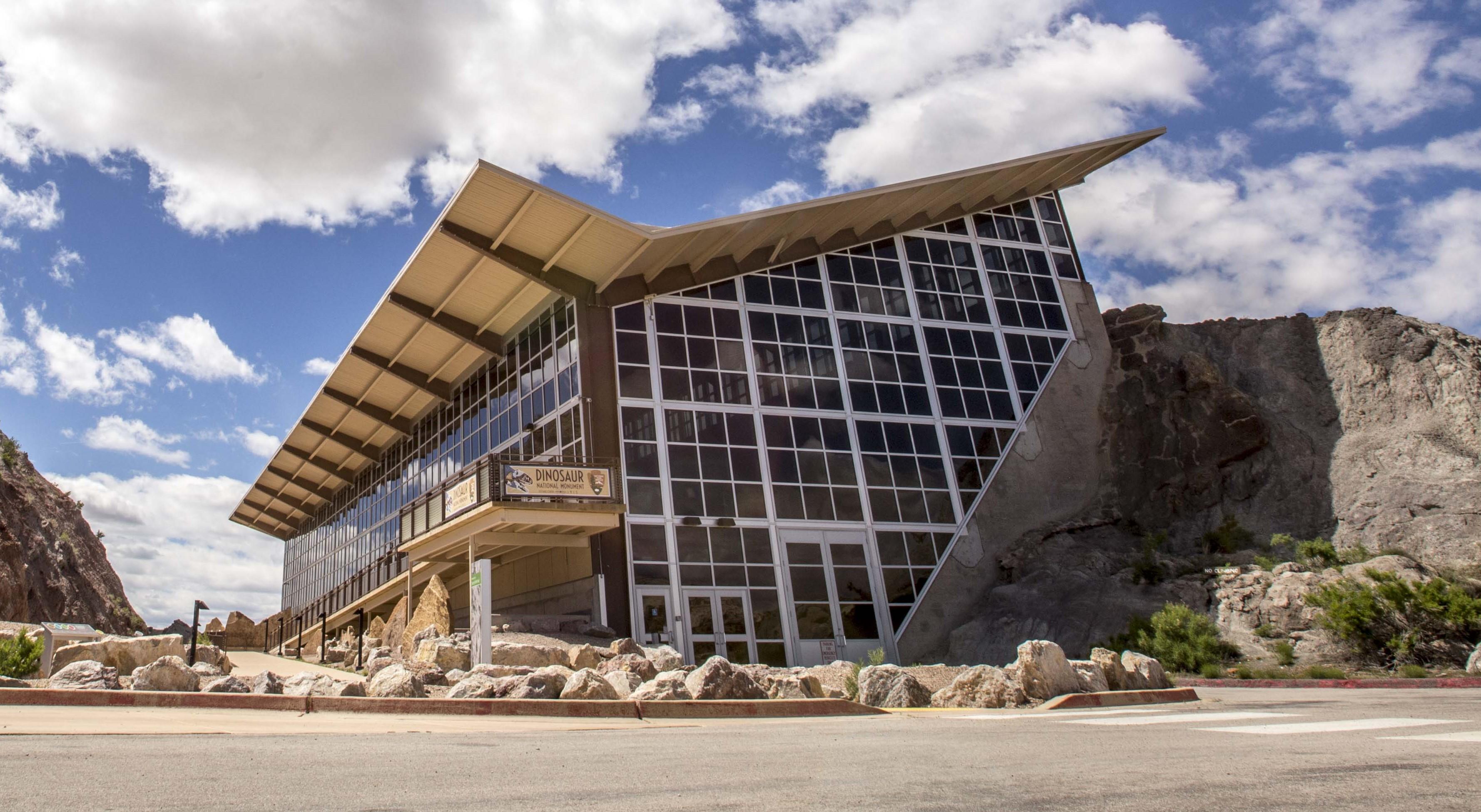
There is a free dirt parking lot at the visitor center. From the lot, a short paved path leads to the visitor center building and on to the covered quarry shelter where active and historical excavations are visible. Cell coverage drops out before you leave Cleveland, so download maps in advance.
The site is normally open Friday through Monday from late spring into early fall, with reduced winter access. Check the BLM Price Field Office page before driving out, since the access road and the visitor center can close on short notice for weather or staffing.
What Fossils You'll Find
You will not collect fossils at Cleveland-Lloyd. Everything you see remains on federal land and is preserved in place. What you can examine, often within arm's length, is one of the best-documented Jurassic dinosaur assemblages anywhere.
- Allosaurus fragilis. Bones of this large theropod dominate the quarry. Skulls, vertebrae, ribs, limb elements, and articulated foot bones are all represented. The Utah state fossil was designated Allosaurus in part because of this site.
- Camarasaurus. A common medium-sized sauropod in the Morrison; partial skeletons and isolated limb bones have come from Cleveland-Lloyd.
- Stegosaurus. Plate fragments, vertebrae, and limb elements have been recovered, though stegosaurs are far less abundant here than allosaurs.
- Other taxa. Fragmentary remains of Ceratosaurus, Torvosaurus, Marshosaurus, Stokesosaurus, Apatosaurus, Barosaurus, Diplodocus, Camptosaurus, and the small ornithopod Dryosaurus have all been identified from the bone bed.
- Non-dinosaurs. Crocodyliform teeth, turtle shell fragments, and a handful of small mammal and lizard elements turn up in the matrix.
The covered quarry building lets you see ribs, vertebrae, and limb bones still embedded in the gray-green Brushy Basin Member mudstone. Wall displays in the visitor center identify each major bone in the active wall, and during the summer field season university crews are sometimes working in the matrix while visitors watch.
"One of the densest concentrations of Jurassic-aged dinosaur bones ever found, with over 12,000 fossils representing at least 74 individual animals." — Bureau of Land Management
Geologic History
The bone bed lies in the Brushy Basin Member of the Morrison Formation, the upper of the formation's two members in this part of Utah. Radiometric dates from ash layers above and below comparable Morrison bone beds bracket the deposit at roughly 152 to 150 million years old, placing it in the Kimmeridgian to early Tithonian stages of the Late Jurassic.
During this interval, central Utah lay several hundred miles inland from the Sundance Sea, on a broad, semi-arid alluvial plain that sloped eastward off the rising Nevadan highlands. Rivers flowing across the plain dropped sand and mud into shallow lakes and ephemeral ponds. The climate was strongly seasonal, with long dry spells punctuated by monsoonal floods. Volcanic ash drifted in repeatedly from arc volcanoes to the west, and the altered ash gives much of the Brushy Basin its bentonitic, swelling-clay texture.
The Cleveland-Lloyd bone bed itself sits in a thin lens of fine-grained mudstone interpreted as a shallow pond or oxbow that periodically dried and refilled. The bones show very little weathering and almost no evidence of long-distance river transport, but they do show considerable disarticulation and trampling, and many surfaces carry shallow tooth marks from carnivores. The leading hypotheses for how so many predators came to die in one small area include a drought-stressed water hole that drew animals in and trapped them in clay, a mired carcass that lured successive scavengers into the same sticky mud, and a slowly accumulating low-energy deposit where carcasses concentrated over centuries. None of the proposed mechanisms is fully accepted, and the site remains an active research subject.
The bone bed was exposed at the modern surface by ongoing erosion of the soft Morrison mudstones across the San Rafael Swell, where uplift of the swell during the Laramide Orogeny gradually stripped away the overlying Cretaceous sandstones.
How Cleveland-Lloyd Dinosaur Quarry Became a Fossil Collecting Site
This is a designated and protected paleontological excavation, not a former industrial quarry. Local sheepherders and ranchers had long known of bones eroding out of the hillside, but the first systematic dig was led by the University of Utah in 1928 and 1929 under Earl Douglass and later F. F. Hintze. Princeton University worked the site briefly in the 1930s. From 1960 through the early 1990s the bone bed was excavated almost continuously, first under William Lee Stokes of the University of Utah, then under James Madsen, whose long monograph on Allosaurus fragilis is still the standard reference. Brigham Young University and several other institutions joined later seasons.
The BLM took over administrative responsibility for the surface in 1965, opened the visitor center and the covered quarry building in 1968, and listed the site on the National Register of Historic Places in 1973. In 2019 the surrounding area was designated Jurassic National Monument, which placed the quarry under the long-term protection of the Antiquities Act and added land around the excavation for resource protection. Active research excavations still occur most summers, run by partner universities and museums under permit.
Collecting Rules and Regulations
Collecting is prohibited. The quarry, the surrounding monument, and all BLM land in the area are managed under the Paleontological Resources Preservation Act and the BLM's regulations on vertebrate fossils. Removing, damaging, or disturbing any vertebrate fossil from federal land is a federal offense. Casual collection of common invertebrate fossils and petrified wood is allowed elsewhere on BLM land in modest personal quantities, but not within the monument boundary.
Practical rules:
- Stay on the marked paths and inside the quarry shelter. Do not climb on fossil exposures or cross posted boundary signs.
- Photography for personal use is welcomed throughout the site and inside the quarry shelter.
- A small per-person entrance fee is charged at the visitor center; America the Beautiful and federal land passes are typically accepted. Confirm current fees with the BLM Price Field Office before driving out.
- The visitor center and quarry shelter are seasonally staffed. Outside the open season the access road may still be drivable, but the buildings are locked and the bone bed is not viewable.
- Bring water, sun protection, and a full tank of fuel from Price or Cleveland. There are no services on the access road, and summer temperatures regularly exceed 100 degrees Fahrenheit.
- Watch for cattle, rattlesnakes, and washouts on the gravel road.
Sources
- Bureau of Land Management, "Cleveland-Lloyd Dinosaur Quarry." https://www.blm.gov/visit/cleveland-lloyd-dinosaur-quarry
- Bureau of Land Management, "Jurassic National Monument." https://www.blm.gov/visit/jurassic-national-monument
- Madsen, J.H., 1976. "Allosaurus fragilis: A Revised Osteology." Utah Geological Survey Bulletin 109.
- Gates, T.A., 2005. "The Late Jurassic Cleveland-Lloyd Dinosaur Quarry as a Drought-Induced Assemblage." Palaios 20(4).
- Utah Geological Survey, "Morrison Formation." https://geology.utah.gov/
.jpg)